mourente.ai

Alejandro Gutiérrez Mourente

How many hours does your team lose typing up paperwork?

I retire that work without changing your tools, in weeks and at a fixed price. For regulated companies, by a former F‑18 pilot.

Book 30 minutes

No cost. The next day you get in writing what to retire first and what it costs you today.

How much are manual documents costing your company? Three minutes, and you see the number before anyone asks for your email.

What does your company do?

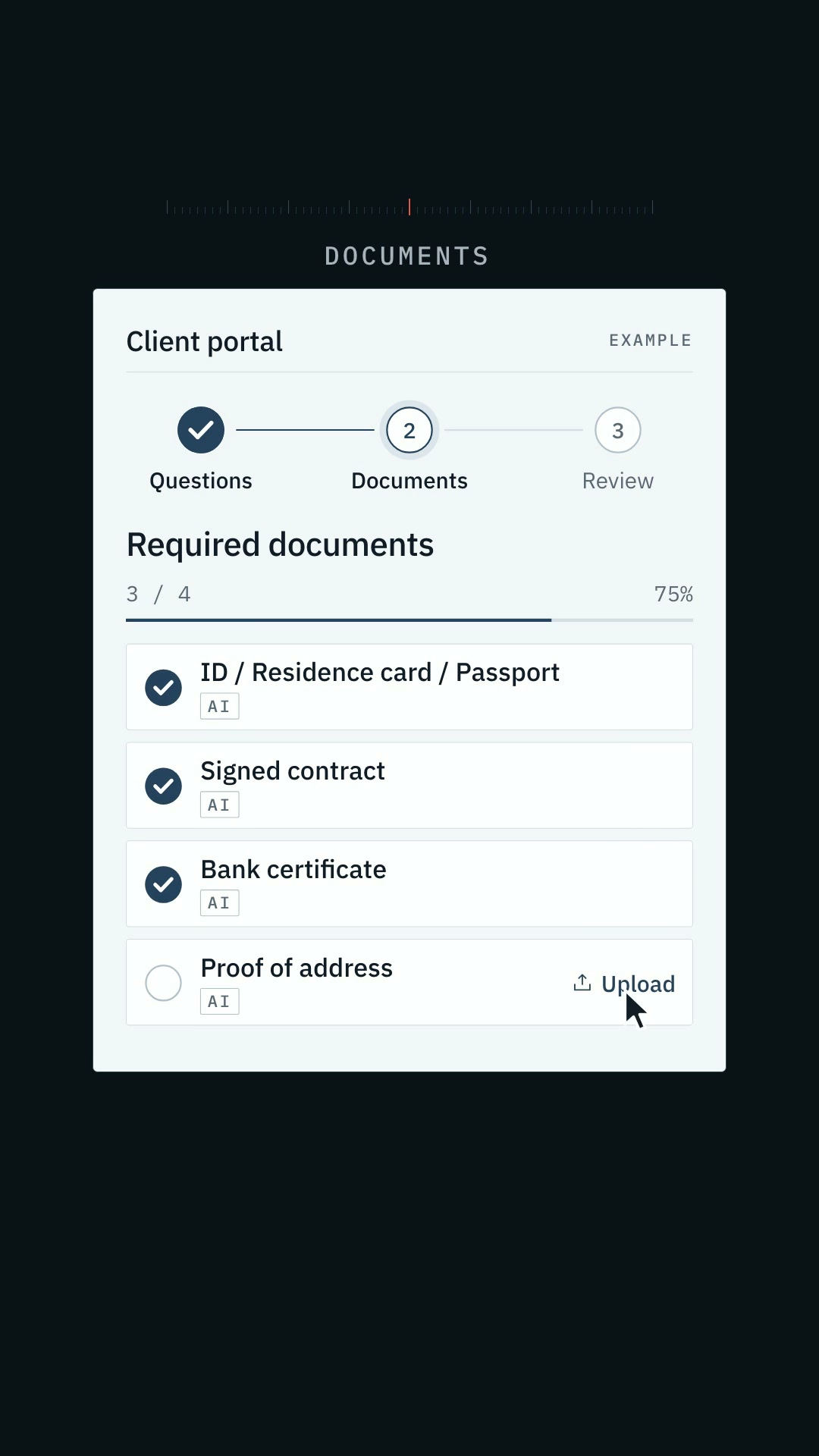
Video: a headline, “Your team stops typing up paperwork”, opens into a portal where the customer answers three questions, uploads four documents the system reads, and the file completes with zero data typed by hand

By the numbers

€5M/yr

Of manual work retired, 12-month projection

DocFields · on volume measured in production

100+ people

Whose review work is retired

Purchase validation · in user testing

10 days

From brief to delivery

More than 1,000 documents checked one by one · multinational transport group

1+ yr

In production

The system that decides which documents to ask each customer for, in 3 languages

323,110

Legal documents searchable

Ponente, validity checked nightly against the BOE

9

Products shipped solo

5 in production, 2 in testing, 2 being built

OPPORTUNITY COST

Three costs that never show up on an invoice.

  1. 01

    Operational

    Your team spends hours typing, copying and checking what a machine does in seconds. It is work that inspires nobody and wears out the best people first.

    How many hours a week go into moving data from a document into a system?

  2. 02

    Strategic

    What your company could do and does not, because the people who know are busy with operations: a new service, another market, better service.

    What would you do this quarter if your team got those hours back?

  3. 03

    Competitive

    Your customers compare you with other offers. If others answer in hours and you take days, the customer notices before you do.

    How long do you take to answer a customer what your competitors answer in hours?

The operational one can be measured today: work it out in three minutes

You see the number before anyone asks for your email.

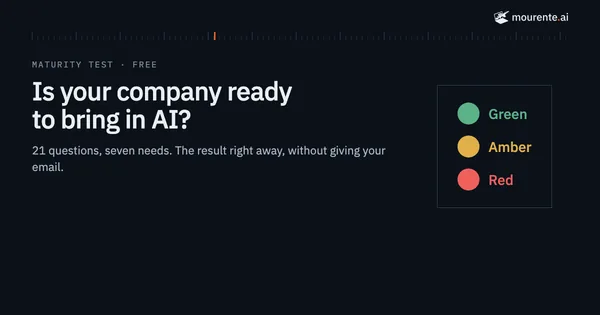
Or start with the maturity test: 21 yes-or-no questions, with the result before any email.

Your company is paying people to read documents, copy fields and chase each other for approvals. I find that process, put it in front of its own numbers and retire it: designed first, built end to end, in production with real users in weeks. At a regulated group, €5M a year of manual work retired, a 12-month projection on measured volume: the estimated work of 100 people.

I work as what the industry now calls a forward-deployed engineer: inside your company, next to your team, for months, until the system is in production. That is how I work with a dealer group: the portal where their customers hand in their documents, the service that reads those documents, and a purchasing process redesigned with the people who buy every day, with business decisions taken on their own numbers. One person means one accountable, from the first call to the first production incident. And you never depend on me: everything built, the plan and the decisions belong to your company from day one.

Strategy, execution, and the on-call phone number. One person, accountable.

How you keep operating without me

Response
Production incidents answered within 24 working hours. Critical ones, the same day.
Ownership
Everything built belongs to your company from day one.
Handover
Every delivery includes the instructions to run it. Your team runs it without me.
Visibility
A portal of your company with the requirements, the notes, the documents and every version: what changed, what is missing and who owns it.

Selected work

Three systems in production or user testing, two of them open to try live.

DocFields.ai

Take a photo or a scan of a document (an ID card, an invoice, a contract, a vehicle spec sheet) and in seconds its data lands clean in the software your company already uses. Nobody types and nobody changes tools. In production at a regulated group across 34 document types: €5M a year of manual work retired, a 12-month projection.

Each document is read first with the cheapest method, and only the doubtful ones move up a level, up to a person when needed. Most are settled at the first one.

Design rationale
Field
Document intelligence
Status
Production, docfields.ai
Scope
24 processors · €5M/yr of process retired, 12-month projection on measured volume
Technology
Python, Document AI, Anthropic, OpenAI
NOYESNOYESDocument receivedREGEXRegex parser · 4 detectors~0 cost · < 50 msCritical fieldsextracted?DOC AIDocument AI · 24 processorsDNI · vehicle reg · invoices · contractsConfidence≥ threshold?VISIONVision · Anthropic | OpenAIclaude-sonnet-4 · gpt-4o · selectableUNIFYNormalize + provenancesingle shape · provider trace · signature checkStructured payload out~70% of docsstop here.LEGENDStart / EndStepFocal decisionDecisionMergeConvergent output

Vehicle Financing Document Intake

Before: a person reviewed every customer document before the finance application. Now, in a dealer group: documents are read and checked on their own, and nobody touches anything until the application.

If two documents disagree, the system spots it and writes it down, field by field. Nobody types anything between the customer uploading the document and the application going out.

Design rationale
Field
Client document intake
Status
Pre-production
Scope
A platform that manages the documents a client hands to the company, for vehicle financing in a dealer group with several companies
Technology
Next.js 16, Hono BFF, GraphQL, DocFields.ai
Try it liveView the full diagramSynthetic data

Business Management System

Before: more than 100 people re-read purchase files. Now: files close on their own and one person only looks at what does not match. User testing found nine faults; they were closed within 48 hours.

Every figure on the contract is checked against the other documents in the file. Most close without anyone touching them.

Design rationale
Field
Backoffice automation
Status
Pre-production, in user testing
Scope
Workload equivalent to more than 100 people, projected on measured volume
Technology
Multi-tenant BMS, DocFields.ai, cross-validation engine
Try it liveView the full diagramSynthetic data

Reputation intelligence

Before: a network with more than a hundred points of sale watched its reputation rating by rating, shop by shop, on Google. Now: every review is broken down into what the customer praises and what they criticise, and a map says which shops perform above or below what their volume would predict, and why.

A shop at 3.8 and rising is worth more than one at 4.2 and falling. The average rating arrives late; this month's reviews do not.

Design rationale
Field
Reputation intelligence
Status
Engine in production · map in demonstration
Scope
37 measurable aspects in five areas: product, people, process, environment and price. Performance index: actual rating against the one expected for the review volume, in five bands.
Technology
Prism Engine (whyrating.com), aspect classification with Claude, MapLibre, Next.js

More work

  • Document Intake Questionnaire

    Thirty-four document types, three languages. For each customer, the system knows which papers to ask for and which to insist on when the easy answer fails.

    Production, 1+ yearDiagram
  • Business-Native Assistant

    It knows the case, the document, the calendar and the law that applies, because it works inside the system that holds them. Each company switches on what it needs. Every action is on record.

    Production, at several companies

One case, with numbers

Multinational transport group

scanned documents read and traced to their page

1,000+

scanned documents read and traced to their page

pages

2,400+

pages

from brief to full delivery

10 days

from brief to full delivery

versions of the deliverables, with a change log

7

versions of the deliverables, with a change log

Situation
A fleet document archive: more than a thousand scanned documents to read, classify and be able to defend one by one.
What was built
Every document read twice by machine, with human review of the doubtful ones, and traced to its page. A custom portal with per-person access, document-by-document verification and data ready for Power BI. Thousands of documents generated and signed in batch, with an index and checks.
Result
Ten days from brief to full delivery. Spreadsheet, report, presentation and summary with the same figure, in seven versions with a change log. The client verifies each document in the portal.

Client under a confidentiality agreement. The case data is what has been cleared for publication.

My product

Ponente

Spanish law, cited and in force.

Ponente answers legal and tax questions with the exact article or ruling, whether it is still in force, and a link to the official source. I designed it, built it and run it.

323,110

documents of Spanish and EU law and case law

18

legislations: the State and the 17 regions

Nightly

validity checked against the BOE

47

curated legal areas

Two verifiers with different lenses check every report: one that each cited article exists and says what the draft claims, one that it was in force.

Design rationale

In use for months inside a leading Spanish law firm, and by independent lawyers through ponente.ai.

Claude, MCP, Qdrant, Qwen3 embeddings, PostgreSQL, Temporal, Inngest, Next.js, Hono, LiveKit, Deepgram

Visit ponente.ai

Also mine

FrontBug

Never explain a bug twice.

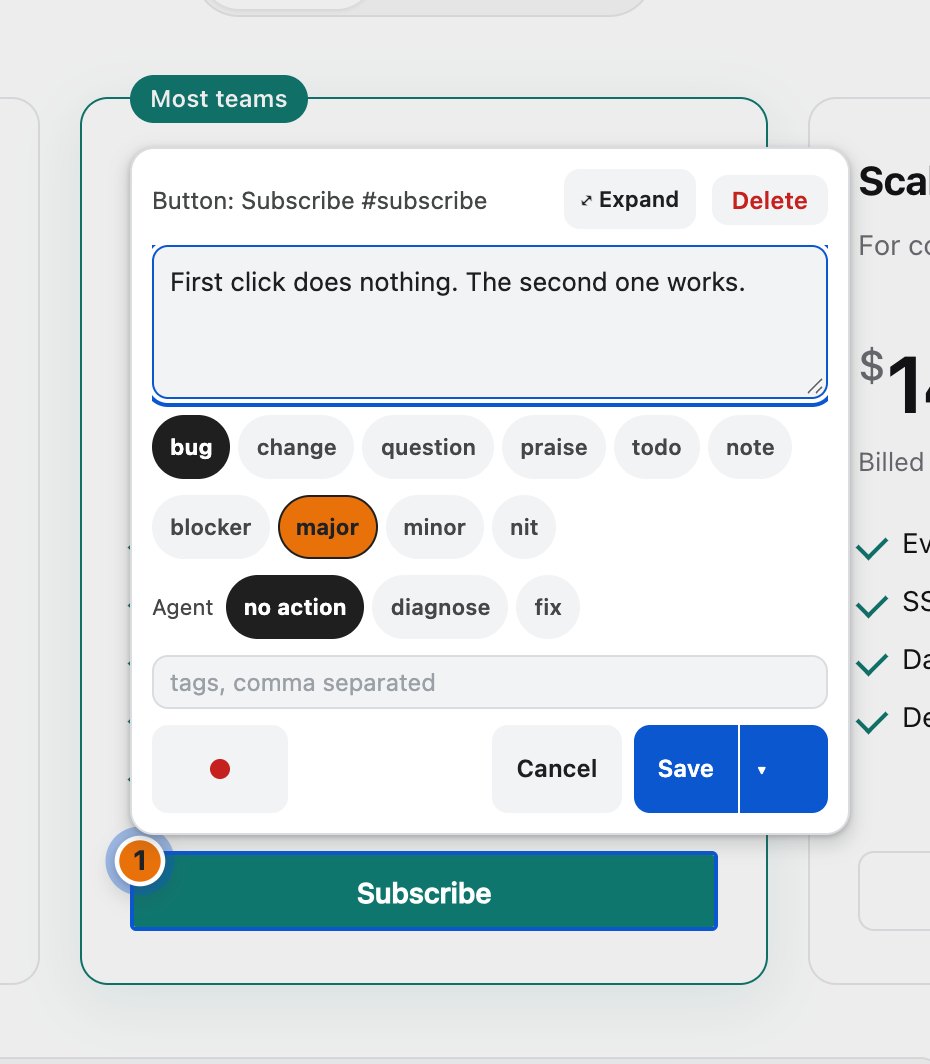
FrontBug is for teams that test software. Whoever finds a bug right-clicks what is broken, and the report writes itself: which part it was, the screenshot and what was going on inside at that moment. It reaches whoever fixes it, or their AI agent, with no emails and no meetings. I designed it, built it and run it.

3

ways to point: an element, a region or the whole page

5

things travel with every note: the part, its logs, who, when and where

30 s

of console and network before each note, to see what happened just before

Offline

works with the network off, and everything stays in your browser until you export it

Whoever fixes something is the worst person to decide it works. So every note goes back to whoever found it, to be checked on the page itself.

Design rationale

A Chrome extension, under Chrome Web Store review since September 2026. The build that talks to your AI agent comes with a free account at frontbug.com.

Chrome extension, Next.js, Hono, PostgreSQL, Better Auth, Claude Code and Cursor as agents

Visit frontbug.com

Three ways to point at something

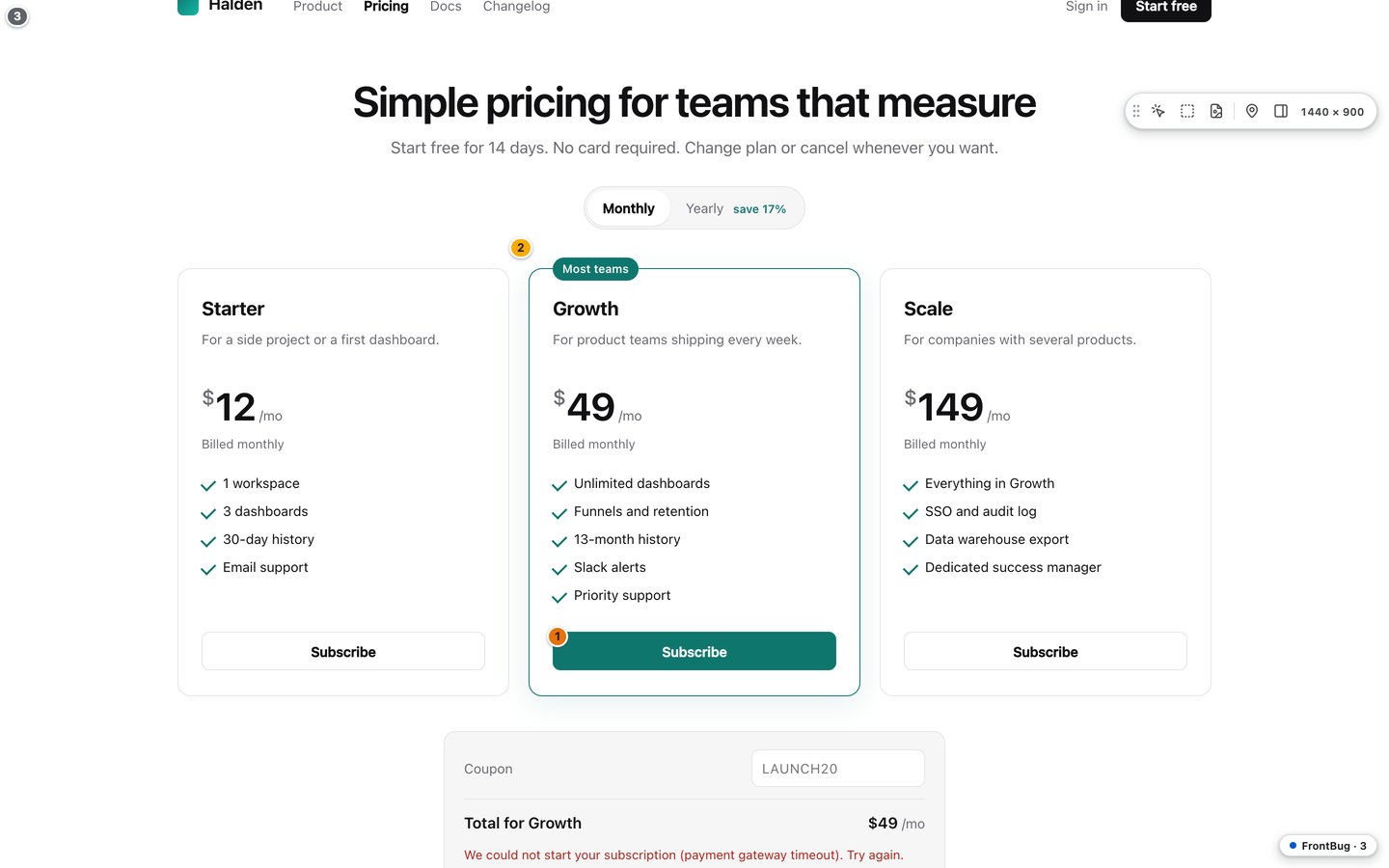
  • A pricing page with the Subscribe button outlined and a numbered pin next to it

    An element

    Right-click it. The note is anchored to that part and survives a reload.

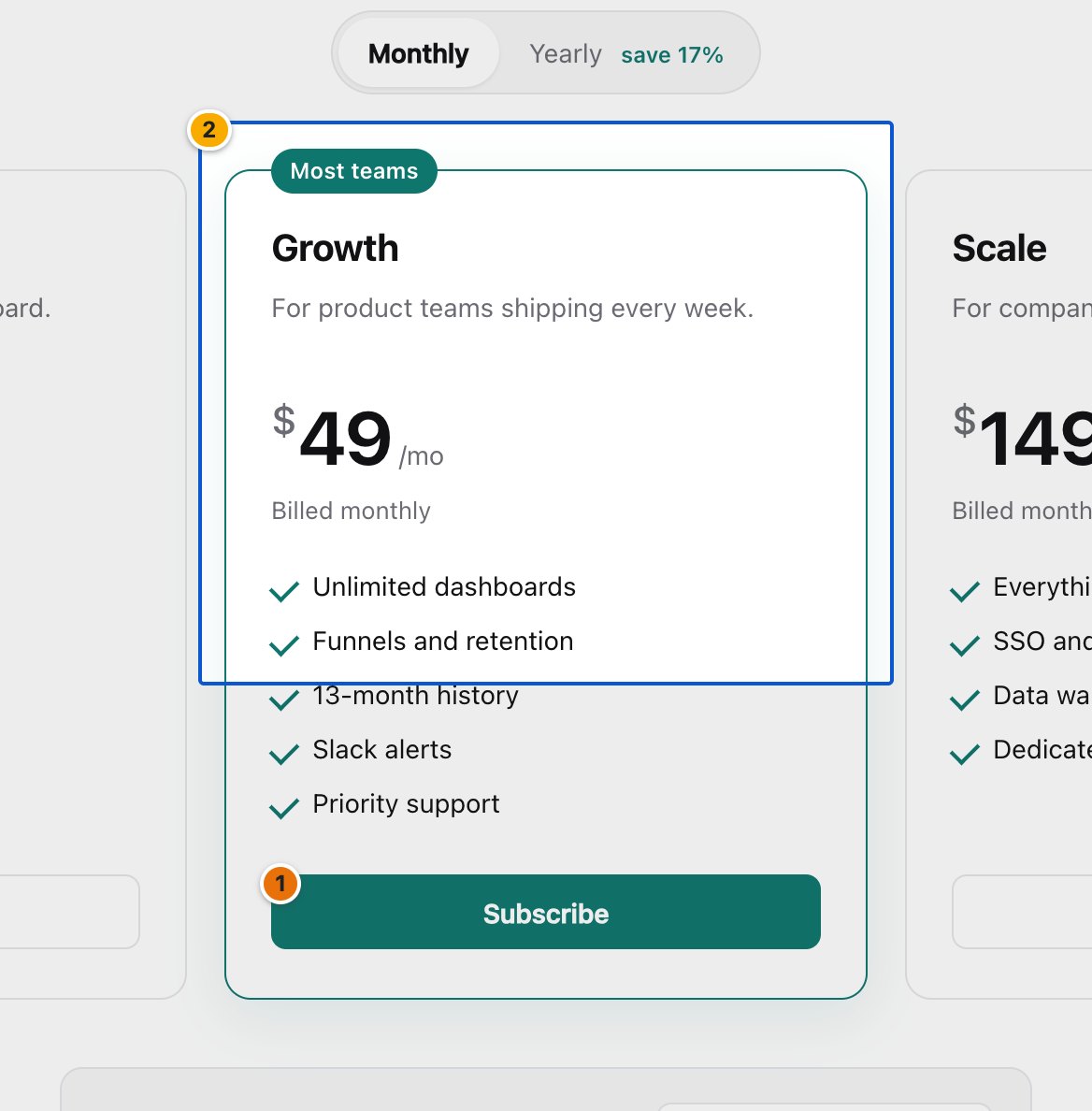
  • A rectangle drawn over a pricing card, with the parts inside it listed in the note

    A region

    Drag a rectangle and FrontBug lists everything inside it.

  • A whole page with three numbered pins: one on a button, one on a card, one for the page

    The whole page

    Full height in one image, with the pins drawn on top.

HOW I WORK

Five steps. At each one you know what you get, how long it takes and what you decide.

AI on top of a messy process makes the mess faster. So I measure and specify first, and build after. The offers below are stretches of this route.

All of this happens in a portal of your own, from day one: the questionnaires I use to gather requirements, the documentation, the notes of every meeting and every published version, with what changed, what is pending and who owns it. You do not find out by email: you open it and see it.

  1. 01

    Measure

    What I do
    I sit with the people who do the work and measure what it costs today: hours, people, errors.
    You get
    The process on one page and what it costs a year, in numbers.
    Takes
    1 week
    You decide
    Whether it is worth building.
  2. 02

    Design

    What I do
    What the system will do, screen by screen, how it fits with what you already use, and how we will know it works.
    You get
    The plan in writing. Yours whether or not we continue.
    Takes
    1 week
    You decide
    Approve the scope.
  3. 03

    Build

    What I do
    End to end, with a tested delivery every week.
    You get
    Every week, something that works and that your team can see.
    Takes
    4 to 6 weeks
    You decide
    What goes into each delivery.
  4. 04

    Production

    What I do
    Real users, faults found in use and closed by a date.
    You get
    The manual work retired, with its numbers measured.
    Takes
    1 to 2 weeks
    You decide
    Sign off.
  5. 05

    Hand over

    What I do
    The instructions to run it, the decisions in writing, and a response if something fails.
    You get
    A system your team runs without me.
    Takes
    Included
    You decide
    Whether to continue with me.
  • Diagnostictwo weeks · €4,500
  • Pilotsix to eight weeks · from €24,000
  • Retainerthe same route with the next process · from €8,000/month

What comes already built, from day one.

I do not build it for each client: I bring it.

«He already has much of what we wanted to build, plus things we had not considered. Years of inertia limit how we think; he started without it.»
A developer at a software agency, after a day working together
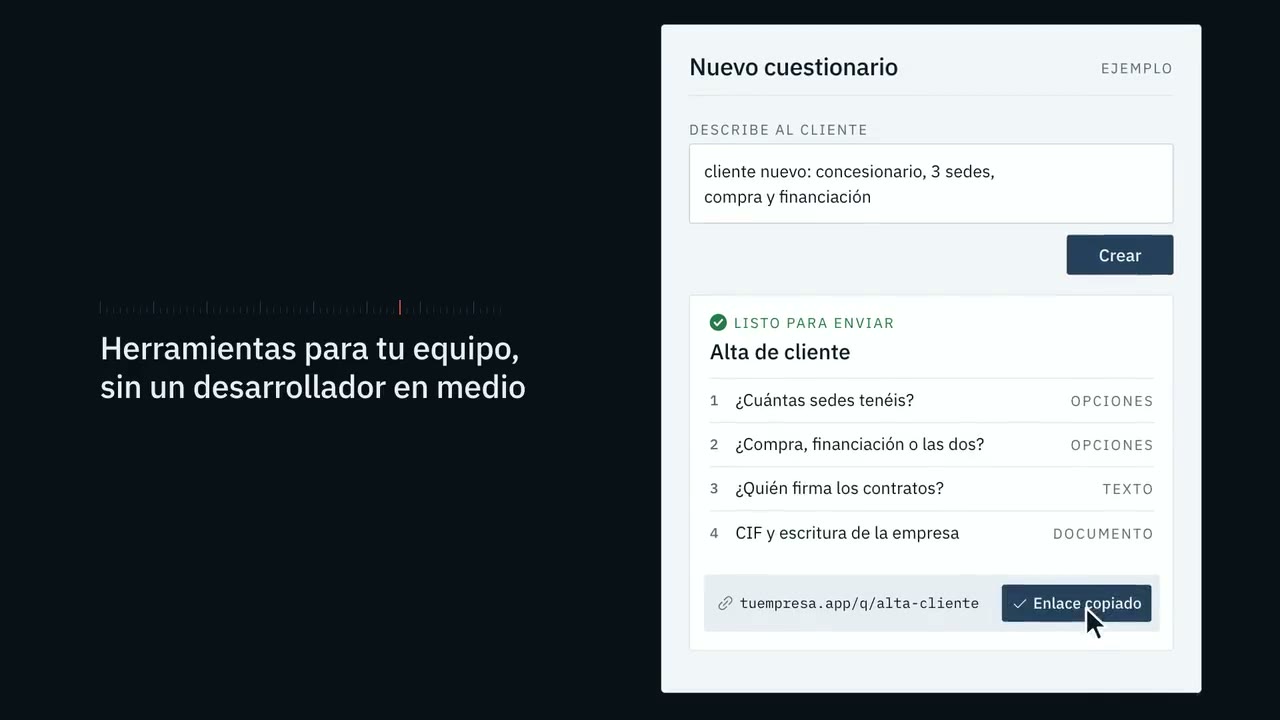
Video with sample data: an AI invoice in your company's name with zero margin, an action log, a meeting whose decisions move into the project, a shared decision backlog, a sentence that becomes a questionnaire, and the project dashboard
Your own AI accounts
Your company contracts the AI directly and pays the real cost: no margin, and no lock-in to me.
Every action on record
You know what the system did, with which data and why. It can be reviewed step by step.
Meetings feed the work
Every meeting is transcribed and what was said goes into the project. Nothing is lost between one call and the next.
A shared decision backlog
Every decision, who took it and when, visible to both of us. Nobody reopens what was decided.
Tools for your team
Describe a client in one sentence and you have a questionnaire ready to send them. Your team does it with no developer in the middle.
A project dashboard
You see progress, what is pending and who owns it, without asking.

I have worked this way from the start, without the agency inertia: no tickets, no approval chain, no “let me put you through to the technical side”.

YOUR DATA

What happens with your data.

If your sector demands more, it is designed with you and put in writing: where the data lives, how it is protected, how long it is kept and who can review it.

Where it runs
On servers in the European Union, in Frankfurt, or on your company's own if you prefer.
AI providers
Anthropic, OpenAI and Google, under commercial contract: they do not learn from your data.
Documents
Your documents are read in Europe and do not leave Europe.
Record
Every action is on record, and each feature is switched on only for whoever contracts it.
Ownership and access
Everything I build belongs to your company from day one. Each person signs in by name, not through a shared link.
Isolation
Each client has its own system, separate from the others, in the EU or on your servers. What comes in as evidence is locked: not even the system itself can change it.

Three ways in. Each one ends with something in users' hands.

The best proposal is not the most complex one, but the one that fits what you need. That is why I start by measuring your process, not by selling a platform.

For those who do not want a consultancy: the person who signs the proposal is the one who writes the code and answers the phone.

Calculate your paperwork tax, 3 minutes

Diagnostic

Two weeks. One process, on paper, with its price tag.

I map the process, measure what it costs you today, design the system that retires it, and write the plan. You keep the document whether or not we continue.

€4,500 · credited against the pilot

Pilot

Six to eight weeks. One process, in production, with real users.

End to end: it reads the documents, applies your rules, gives your team a screen and connects to what you already use. Designed before it is built; tested on every delivery; handed over with the decisions written down.

From €24,000 · half to start, half when users have it

Retainer

Month by month. The next process, and the one after.

Same builder, same method, a standing capacity to keep retiring manual work and to answer the phone when something fails. Priority on your list, no starting over.

From €8,000/month · cancel with one month's notice

If the diagnostic finds no case worth building, I say so, and you keep the report.

FREQUENTLY ASKED

What people ask before we start.

You are one person. What happens if you are not around?

Everything I build stays with your company from day one, with the plan, the decisions and the instructions to run it: your team or any other developer runs it without me. If something fails in production, I answer within 24 working hours; if it is serious, the same day. And I do not take on more projects than I can serve with that commitment.

Who owns the code?

You do. The system, the plan and the decisions belong to your company from day one. No licences, and no depending on me for it to work.

What happens with our data?

On servers in the European Union or on yours. The AI providers do not learn from your data; it is in the contract. Every action is on record. If your sector demands more, it goes in writing: where the data lives, how it is protected, how long it is kept and who reviews it. And if needed, the whole system is installed on your servers.

How long does it take?

The diagnostic, two weeks. The pilot, six to eight weeks until real people use it. The deadline is fixed in writing before anything is built.

What does the price include?

Everything between the first call and the handover: analysis, plan, build, testing, launch and instructions. No extra hours, no separate line items. Servers and AI providers are paid separately, at cost, and estimated in the plan.

What if there is no case?

I tell you in the diagnostic and you keep the report. That beats building something nobody will use.

Does it work with what we already have?

Yes, and that is the norm: your management software, the CRM, the intranet, network folders, email. The system connects to what is there. Nobody changes tools to use it.

Why one person and not a consultancy?

Because the person who signs the proposal is the one who writes the code, tests it with your users and answers the phone. No account team, no approval chain, no "let me put you through to the technical side".

Do you work from outside, or inside the company?

Inside. It is the forward-deployed model: during the project I sit with your team, in your meetings and in your systems, and business decisions are taken with the people who live the process, not in a separate room. Remote most of the time; on site when the process calls for it.

How do I know where the project stands?

You open it. From day one your company has its own portal with the requirements questionnaires, the notes of every meeting, the documentation and every published version, with what changed, what is pending, who owns it and its status. The same place lets your team hand me documents without emails and attachments.


F/A-18 Hornet in vertical climb

Decade as a fighter pilot.

A decade as a fighter pilot and Operational Safety Officer in the Spanish Air Force. In the cockpit I learned that a system either works under pressure or fails the people who depend on it. That is why everything I build records every step, checks before it acts and can be reviewed figure by figure.

The full story →
Portrait of Alejandro Gutiérrez Mourente

Thirty minutes. One process. A number.

If you run operations, technology or the company in a regulated business, book a diagnostic call. The next day you get in writing which process to retire first, what it costs you today, and whether I am the right person to do it. If there is no case, I say so.